
Your rate
Biggest lever
Half a point matters
Each 0.5% of rate shifts the price your income supports by tens of thousands. Locking your rate is the fastest way to afford more.
 Conventional LoansNMLS #65506Powered by Valley West Mortgage
Use the 28/36 rule, a free affordability calculator, and the real income it takes to buy a $350k–$650k home in Clark County — explained by a local Las Vegas mortgage lender.
Quick answer — A common rule is the 28/36 guideline: keep your housing payment under 28% of gross monthly income and total debt under 36%. In Las Vegas, a $450,000 home with 10% down at 6.5% needs roughly $100,000–$110,000 in household income — less debt or more down raises that.
Led by Vatche Saatdjian · Las Vegas mortgage expert since 2004 · NMLS #69363 · Updated June 2026
| Las Vegas home price | Income needed (est.) | Est. monthly payment |
|---|---|---|
| $350,000 | ~$82,000 | ~$2,550 |
| $450,000 | ~$103,000 | ~$3,280 |
| $550,000 | ~$123,000 | ~$4,010 |
| $650,000 | ~$143,000 | ~$4,740 |
Estimates assume 10% down, a 6.5% rate (as of June 2026), about $400 in other monthly debts, and Clark County taxes & insurance. See the full breakdown below.
Affordability isn't the price a lender will approve — it's the payment you can live with. Lenders look at two ratios: your housing payment vs. income (front-end, target ~28%) and all debt vs. income (back-end, often allowed to 43%–45% on conventional). Stay inside both and the home fits your life, not just the loan.
"Your debt-to-income ratio (DTI) is all your monthly debt payments divided by your gross monthly income."Consumer Financial Protection Bureau -- consumerfinance.gov/ask-cfpb
The fastest way to a real number is to model it. Start with the calculator below, then confirm it with a local pre-approval — we price conventional, FHA, and VA with a local team so you see the full picture. New to the program? Read the Conventional Loans Las Vegas guide.
Four focused tools — start from your income, your budget, or a price. Every figure is a labeled estimate, not a Loan Estimate, pre-approval, or commitment to lend.
Estimate using a 43% back-end DTI and ~22% reserved for taxes, insurance, PMI, and HOA. Not a pre-approval.
What this estimates: the price your income and debts support at the 43% guideline. Why it may differ: credit, reserves, and HOA dues all move the real figure — which is why what you can afford in Las Vegas always comes down to your specific file.
Works backward from the payment you choose. About 20% of the payment is reserved for taxes, insurance, and PMI.
What this estimates: the home price a fixed monthly budget can buy. Why it may differ: taxes, HOA, and PMI vary by neighborhood and credit, so two buyers with the same budget can afford different Las Vegas homes.
Includes estimated Clark County tax, insurance, and PMI under 20% down. Not a Loan Estimate.
What this estimates: the full monthly payment (PITI) for a given price. Why it may differ: real taxes, insurance, and HOA are set per property, so treat this as a starting Las Vegas mortgage payment estimate, not a quote.
Education only — not financial advice. A purchase builds equity; renting does not.
What this shows: total rent over your timeline vs. buying. Why it matters: a purchase turns part of each payment into equity. A starter comparison.
Estimate only — not a Loan Estimate, rate quote, pre-approval, or loan offer. Figures use the 28/36 guideline and illustrative Clark County costs. Your real numbers depend on credit, income, property, and underwriting. Equal Housing Opportunity · NMLS #65506.
A working estimate of the household income it takes to qualify at four common Las Vegas price points — assuming 10% down, a 6.5% rate, about $400 in other monthly debts, and Clark County taxes and insurance.
| Home price | Est. monthly payment | Income needed |
|---|---|---|
| $350,000 | ~$2,550 | ~$82,000 |
| $450,000 | ~$3,280 | ~$103,000 |
| $550,000 | ~$4,010 | ~$123,000 |
| $650,000 | ~$4,740 | ~$143,000 |
For context, the Las Vegas metro median sale price has hovered near $480,000 as of June 2026, per Las Vegas REALTORS® — so a typical local purchase fits a household earning roughly $105,000–$115,000 with moderate debts. Veterans can often buy more with $0 down and no PMI — see the VA Home Loans guide. Smaller down payment or lower credit? Compare FHA in Las Vegas.
Sources & assumptions (June 2026): median price — Las Vegas REALTORS®; 2026 conforming loan limit, Clark County ($832,750) — FHFA; Clark County property tax (~0.5–0.65%/yr) — Clark County Assessor; area median household income — U.S. Census. Figures are estimates, refreshed quarterly; rate assumption 6.5% as of June 2026.
Every half-point of rate changes the price your income supports by tens of thousands of dollars. Here's live sample conventional pricing as the market moves — direct lending means more room to compete on your number.
The live table couldn’t load in your browser. Our Las Vegas team will run today’s conventional pricing for you over the phone.
Conventional sample rates are for illustration and update during the day. Your rate and APR depend on credit, loan-to-value, loan amount, points, and occupancy; assumptions appear in the table. Not a rate quote, a loan offer, or a commitment to lend. Valley West Mortgage · NMLS #65506 · Equal Housing Opportunity.
Your debt-to-income ratio is the lever behind every affordability number. Lower it and the same income buys more house. Here's where the lines fall and how your existing debts move the dial.
Conventional often allows back-end DTI to 43%–45% with strong credit; the 36% mark is the comfortable zone.
Lenders read both your housing share and your total-debt share.
Rough Las Vegas price by household income, 10% down at 6.5%.
Recurring debts come straight off the price you qualify for.
The calculator gives a guideline — a local pre-approval gives a number you can shop with. We'll review your income, debts, and credit with a soft pull that won't affect your score and map the most house you can comfortably buy in Las Vegas.
Soft credit check to begin — no impact to your score. All loans are subject to credit, income, property, and underwriting approval.Run the numbers in the full conventional calculator, see how your down payment changes things in the 2026 down payment guide, or compare the best conventional lenders in Las Vegas. Figures shown are illustrative examples only.
Get a personalized affordability review and a Las Vegas pre-approval checklist from a local mortgage lender — no pressure, no obligation.
Routes to our local Las Vegas team. Soft credit check to start — no impact to your score.
Two buyers earning the same salary can qualify for very different homes. These are the levers that decide which one is you — and most of them are in your control. The loan program you use is one of the biggest levers of all, and how each Las Vegas home loan program changes what you qualify for explains why two identical incomes can land on different price ranges.
Each 0.5% of rate shifts the price your income supports by tens of thousands. Locking your rate is the fastest way to afford more.
A $500 car payment can cost you roughly $90,000 of buying power. Clearing recurring debt before you apply lifts your max price right away.
A bigger down payment lowers the loan and the payment — and at 20% it removes PMI entirely, freeing room in your monthly budget for a higher price.
Higher credit earns a lower rate and cheaper PMI on conventional — both of which raise the price your income comfortably supports.
Clark County property tax runs about 0.5%–0.65% a year, and many Las Vegas communities carry HOA dues. Both are part of your housing payment and the DTI math. Our parent site’s take on the honest affordability math contrasts the lender ceiling with a comfort budget you can actually live on.
Veterans can buy more with $0 down and no PMI; FHA helps thinner credit; conventional rewards strong files. The right program changes your max — we compare all three.
Know your real number — get pre-approved in minutes.
Get pre-approvedA quick path from a calculator estimate to a real, written maximum — with a local Las Vegas team the whole way.
Use the calculator above to turn your income, debts, and down payment into a target price range.
We verify income, debts, and credit and hand you a written maximum — so you shop with confidence, not a guess.
With a real number and a local mortgage lender behind you, your Las Vegas offer stands out — and closing stays on schedule.
 Henderson, NV
You get a price you can comfortably afford — and a local team that priced it with a local team, with no pressure to stretch.
Get pre-approvedA fast, no-pressure review confirms the most house you can comfortably buy in Las Vegas — handled locally across conventional, FHA, and VA.
Get pre-approvedNo obligation. Secure online start. Options subject to approval.
The 28% housing rule and a conventional loan at approximately 6.5%–7% are used for these illustrative estimates. Actual income requirements depend on your debt load, credit score, down payment, property taxes, and HOA. All figures are estimates and not a commitment to lend.
| Home price | Down payment (10%) | Loan amount | Est. monthly payment (P+I+T+I, illus.) | Income needed (28% rule) |
|---|---|---|---|---|
| $350,000 | $35,000 | $315,000 | ~$2,600–$2,800 | ~$93,000–$120,000/yr |
| $425,000 | $42,500 | $382,500 | ~$3,100–$3,400 | ~$110,000–$146,000/yr |
| $470,000 (median) | $47,000 | $423,000 | ~$3,400–$3,700 | ~$120,000–$159,000/yr |
| $550,000 | $55,000 | $495,000 | ~$4,000–$4,400 | ~$143,000–$189,000/yr |
| $650,000 | $65,000 | $585,000 | ~$4,700–$5,200 | ~$169,000–$223,000/yr |
Assumptions: 10% down, 30-year conventional, illustrative 6.5%–7% rate range, estimated monthly property taxes $250–$400 (Nevada effective rate ~0.5%–0.7%), homeowners insurance ~$150/mo. Figures are illustrative only — not a rate quote, Loan Estimate, or commitment to lend. Use the calculator for your numbers. Las Vegas median from GLVAR Q2 2026. NMLS #65506. Equal Housing Opportunity.
Nevada has no state income tax (Nevada Constitution, Article 10). A household earning $120,000/year in Las Vegas keeps roughly $5,000–$7,000 more annually than a comparable household in California (9.3% bracket) or Oregon (9% bracket). That extra take-home directly increases what you can put toward a mortgage payment. Combined with Clark County’s property tax rate of approximately 0.5%–0.7% (Nevada Department of Taxation), the total cost of ownership in Las Vegas is significantly lower than comparable West Coast markets.
The same income buys different things depending on where in Clark County you shop. Approximate 2026 median prices from GLVAR — actual prices vary by street, community, and condition.
| Area | Approx. median | Entry-level range | What $500K buys |
|---|---|---|---|
| North Las Vegas | ~$430,000 | $320k–$450k | 3–4 bed single family, newer construction |
| Las Vegas (general) | ~$478,000 | $350k–$520k | 3–4 bed established neighborhoods |
| Henderson | ~$540,000 | $400k–$600k | 3–4 bed in planned communities |
| Summerlin (standard) | ~$600,000–$700,000 | $500k–$750k | 3 bed in master-planned community |
| Summerlin (luxury) | $800,000+ | $750k–$1.2M+ | 4–5 bed guard-gated; jumbo likely |
Median price estimates from GLVAR Q2 2026. Range figures approximate. See the 2026 conforming limit guide to understand when Summerlin or Henderson prices cross into jumbo territory. Review full conventional requirements before you shop. NMLS #65506. Equal Housing Opportunity.
Customer experiences may vary. Reviews do not guarantee loan approval, rates, terms, or outcomes.
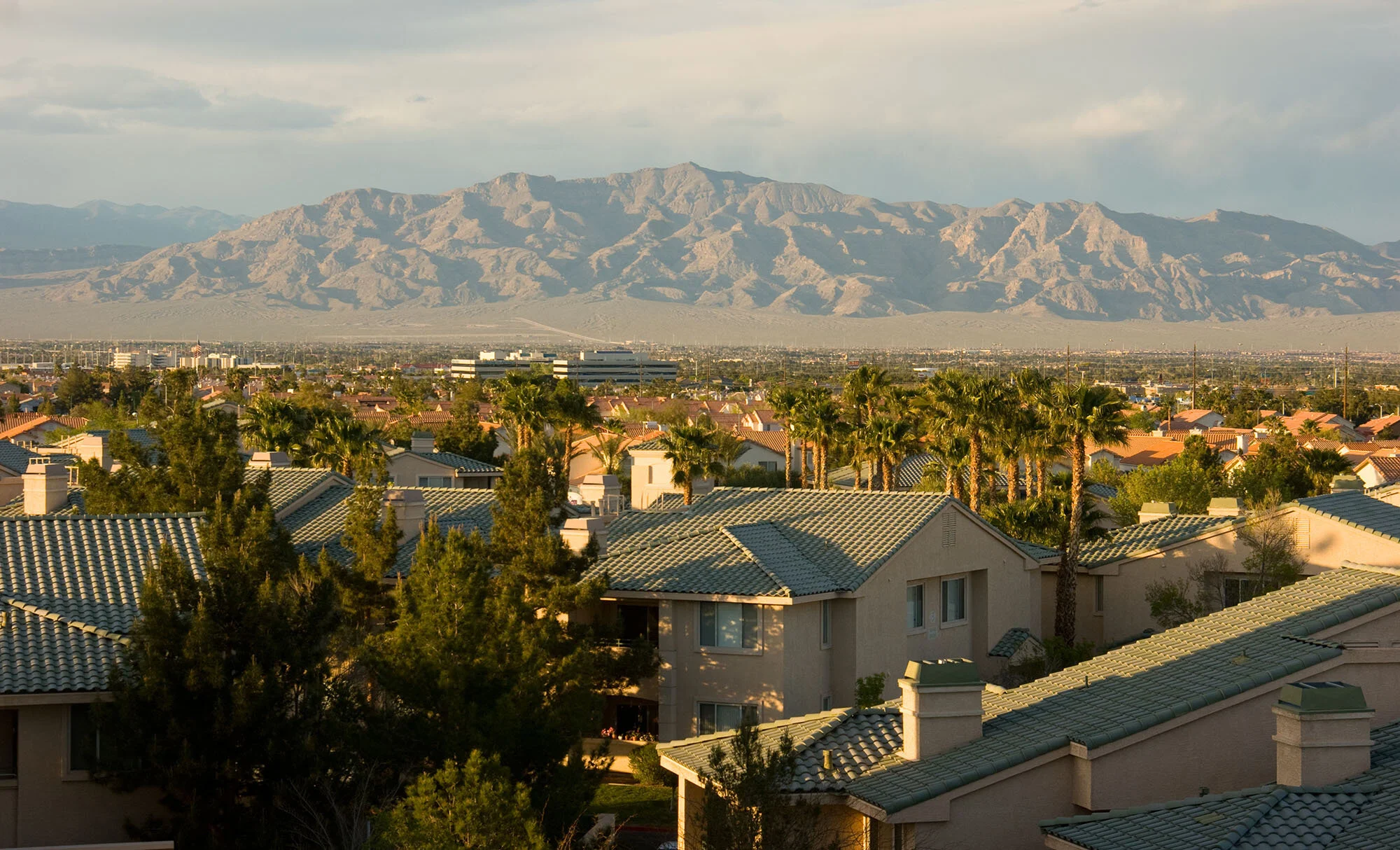
One application. One local team, and a clear, written maximum — across conventional, FHA, and VA, handled by your local team.
Valley West Insurance shops Las Vegas home & auto coverage across top-rated carriers — one local team for the house and everything in it.
This page is built to answer a specific conventional loan question, but the right move depends on your credit, property, budget, timing, and local Nevada details. Start with the calculator or guide below, then ask Valley West to compare the real options.